Éditoriaux Défense Sécurité Terrorisme Zones de conflits Logistique Livres de référence Liens
Terre Air Mer Gendarmerie Renseignement Infoguerre Cyber Recherche

Navy Researchers Fire 1

Navy Researchers Fire 1,000th Shot on Laboratory Electromagnetic Railgun

By Grace Jean, Office of Naval Research.

Arlington, Virginia -- October 31, 2011 -- (NNS) -- Scientists at the Naval Research Laboratory (NRL) hit a materials research milestone in the Office of Naval Research's (ONR) Electromagnetic Railgun program when they fired a laboratory-scale system for the 1,000th time Oct. 31.

"A significant amount of development has been coming out of NRL to support the program," said Roger Ellis, ONR's Electromagnetic Railgun (EMRG) program officer. "It's a key piece of making railgun successful."

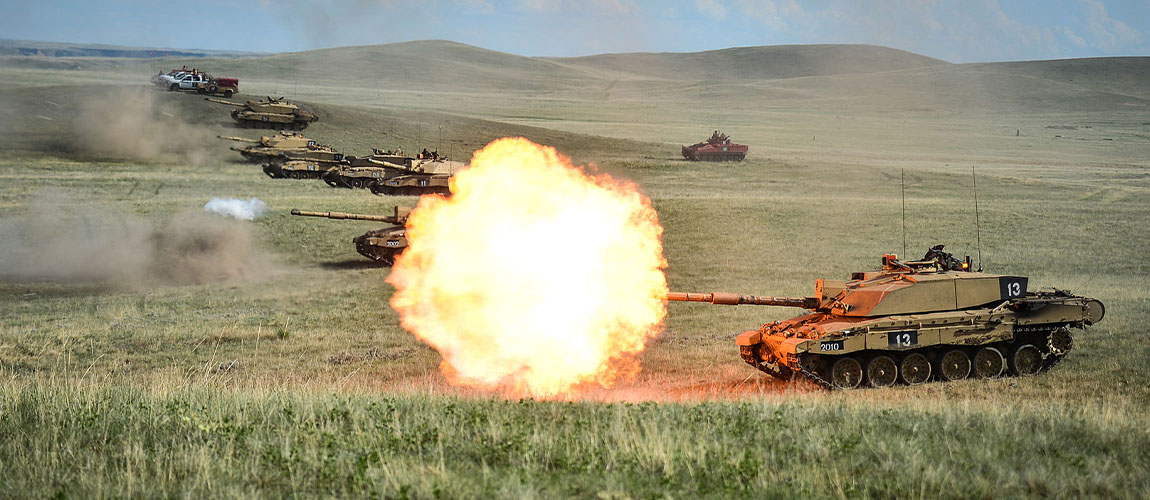
The EMRG is a long-range weapon that launches projectiles using electricity instead of chemical propellants. Under development by the Department of the Navy (DON) for use aboard ships, the system will provide Sailors with multi-mission capability, allowing them to conduct precise naval surface fire support, or land strikes; cruise missile and ballistic missile defense; and surface warfare to deter enemy vessels.

"The weapon does all its damage because of its speed," said Dr. Roger McGinnis, program executive for ONR's Naval Air Warfare and Weapons Department, which oversees EMRG. Launched at 2 to 2.5 kilometers per second (4,500 to 5,600 mph) without using explosives, the projectile reaches its target at speeds that require only a small charge similar to that found in automobile airbags to dispense its payload, eliminating the objective through the inherent kinetic energy.

"EMRG will provide the Department of Defense with an advantage in future conflicts by giving troops the ability to fire weapons inexpensively against targets," McGinnis said.

As part of the EMRG development program, ONR and NRL co-funded scientists at NRL to build and operate a 6-meter long, 50 mm diameter railgun as a subscale experimental lab at the Materials Testing Facility (MTF). Researchers fired the first shot in March 2007. After improving the gun's sliding armature and rails, the lab has fired an average of 300 shots per year since 2008.

A railgun launches projectiles by generating magnetic fields created by high electrical currents that accelerate a sliding metal conductor, or armature, between two rails.

"The 1,000th shot is testing new ideas of how the armature interacts with the rails," said Dr. Robert Meger, head of NRL's charged particle physics branch, which conducts about 30 experiments annually on the railgun. Following each test firing, researchers dismantle the gun to examine all the components. They slice up the rails for further analysis under a microscope to reveal surface damage.

During the course of firing all 1,000 shots, NRL scientists have experimented with a variety of materials and geometries to determine which ones can withstand the metal-melting temperatures and pressures of shooting a 1.5-megajoule energy weapon. One megajoule of energy is equivalent to a 1-ton car traveling at 100 miles per hour.

"We've really explored a lot of territory," ONR's Ellis said. "When you couple what we're seeing in testing with what we're seeing in modeling and simulation, it results in some interesting barrel shapes that you wouldn't intuitively think about. Railgun barrels don't necessarily have to be round as in most conventional gun designs."

Since 2005, scientists have been working to increase the railgun's barrel life, muzzle energy and size. Ultimately, their work will help to produce a 64-megajoule railgun with a range of about 220 nautical miles.

"You really have to look at the course of our understanding from the first day they shot to the 1,000th shot today, and how much our understanding of the rail life has dramatically increased, and how much science we have applied to ensure that we're on the path toward a future fieldable system," Ellis said.

Materials science breakthroughs resulting from the test firings have given researchers confidence to transition new technologies to a scaled-up experimental launcher at Naval Surface Warfare Center Dahlgren,Va., which fired a world record setting 33-megajoule shot in December 2010.

ONR provides the science and technology necessary to maintain the Navy and Marine Corps' technological advantage. Through its affiliates, ONR is a leader in science and technology with engagement in 50 states, 70 countries, 1,035 institutions of higher learning and 914 industry partners. ONR employs approximately 1,400 people, comprising uniformed, civilian and contract personnel, with additional employees at the Naval Research Lab in Washington, D.C.

For more news from Office of Naval Research, visit www.navy.mil/local/onr/


Derniers articles

L'adieu aux armes du Transall "Ville de Kolwezi"
Combattre et sauver : Histoire des hélicoptères de l'armée de l'Air
ONR Solicits Bids For Solid-State Laser Weapons For Ships
La rénovation à mi-vie pour une nouvelle jeunesse opérationnelle
Bernard Rogel : Nous assistons à une « maritimisation » du monde
Jean-Paul Paloméros : la réactivité suppose la cohérence
François Hollande : Célébrer notre communauté de destin
Édouard Guillaud : Le moral des armées est aujourd’hui au seuil d’alerte
Jacques Mignaux : Le gendarme, « soldat de la loi »
La rénovation du Mirage 2000-D
Une réflexion vers la Défense
Jean-Yves Le Drian : Nous devons viser un ensemble de défense cohérent
Les noces d'or de l’Escadron d’hélicoptères 1/67 « Pyrénées » de Cazaux
Hélicoptères : un savoir-faire français de haut niveau
EH 1/67 "Pyrénées" -- Cazaux 2012 : Ordre du jour N° 10
Le président Hollande réaffirme l'attachement de la France à la force de dissuasion
Une analyse de la crise syrienne
Intervention militaire en Syrie : quelles possibilités ?
Bâtir une défense commune pour assurer l’autonomie politique et stratégique de l’UE
La Syrie dans la tourmente des « printemps arabes »
Logistics Director Lauds Workforce, Notes Challenges
Regard de marin : passion et complicité
First Full Company of Gray Eagle UAS Now Deployed
Africom Commander Details Current, Emerging Threats
De la réflexion dans les Armées
Ham: Africa Presents Opportunity, Challenges
La sortie de crise au Sahel passe par une refondation de la relation franco-algérienne
"Si leur vie est à la France, leur cœur est à vous"
When UAVs are made by UAE
Panhard Ă  Eurosatory : Le CRAB avec tambour et trompette
Les soldats du pétrole à Eurosatory
Nexter à Eurosatory : « Vers un changement de modèle en Europe »
"Sentinelle des mers",[1] une aventure d’hommes qui écrivent

Du bon usage de l’Histoire et de la géographie…
70e Anniversaire du BCRA, ancĂŞtre de la DGSE
Panetta: Coming Budget Cuts Demand Careful Balance
Strategy Guidance Underscores Asia-Pacific Region
U.S. Navy Rescues Iranian Fishing Vessel from Pirates in Arabian Sea
Carter: Strategic Guidance is Compass for 2013 Budget
Guidance Guards Against All Threats, Officials Say
Strategy Calls for Military to Handle Full Range of Contingencies
Obama: Future Force Will be Smaller, Agile, Ready
Obama: Defense Strategy Will Maintain U.S. Military Pre-eminence
Statement on Defense Strategic Guidance
Honneur, Patrie, Valeur, Discipline : quatre mots chers aux marins
DOD Seeks Safe Hormuz Passage for All, Official Says
Unmanned Helicopter Makes First Delivery for Marines in Afghanistan
Which MALE Drone for the French Forces ? A Call to Reason
Sainte-Geneviève et le patron des gendarmes
Boldness Is at The Heart of Naval Aviation


Directeur de la publication : Joël-François Dumont
Comité de rédaction : François d'Alançon, Jacques de Lestapis, Hugues Dumont, Richard Labévière, Pascal le Pautremat, Yannick de Prémorel.
Correspondants à l'étranger : François de Vries (Bruxelles), Hans-Ulrich Helfer (Suisse), Michael Hellerforth (Allemagne).
Comité militaire : VAE Guy Labouérie (2S), GAA François Mermet (2S), GB Henri Pinard Legry (2S), CF Patrice Théry (Asie).

Contact